
What to Do When Your Dog Dies

When your dog dies, you have more time than it feels like — there’s no need to decide everything in the first few minutes. Care for their body (keep them cool and covered if you’re at home), then decide between cremation and burial when you’re ready. A vet or a cremation provider can walk you through the rest.
Below are the practical steps for the first hours and days — whether your dog died at home or at the vet — without rushing you through any of it. (If you’re still facing the decision itself, see when is it time to put your dog down.)
The first few hours
The instinct is to feel like you have to act immediately. You don’t. A dog’s body can be cared for at home for several hours — often overnight — before anything needs to be arranged. Take the time to sit with them if that helps.
When you’re ready, there are really only two practical things to handle: caring for the body in the short term, and deciding what you want for the longer term. Everything else can wait until tomorrow.
-
Care for the body
A cool space, wrapped in a blanket or towel, within a few hours. In a cool space the body keeps safely overnight — there is no rush to decide the same night.
-
Decide cremation or burial
The one real decision. No rush; sleep on it if you need to. Cremation is the most common and most flexible choice; home burial is illegal in many cities, so check your local ordinance first.
-
Contact a vet or cremation provider
Either can arrange pickup or drop-off. Your vet does not have to be the one who handles it — you can choose your own licensed provider.
-
Notify a few places, when you can
Your microchip registry (to mark the chip inactive), your pet insurer (some reimburse end-of-life costs through a final-expenses rider), your city or county if your dog was licensed, and your vet — to stop appointment reminders that can be painful weeks later.
-
Keep what matters
A paw print, a fur clipping, a collar, a favorite toy. There is no wrong keepsake, and no deadline to choose one.
There's no need to do this all at once. If your dog's body is kept cool, you generally have up to 24 hours — often longer in cold conditions — before cremation or burial needs to be arranged.
If you’re not sure
If you found your dog and aren’t certain, it’s okay to check — gently. The signs are an absence of breathing, no heartbeat, no response to touch or voice, and eyes that stay open and fixed. The body also begins to cool and stiffen within a few hours. If there’s any doubt at all — any chance they could be unconscious rather than gone — call your vet or a 24-hour emergency animal line right away. No one will think less of you for making sure.
If your dog died at home
A few practical steps, offered gently:
- Find a cool spot. A dog’s body keeps best somewhere cool — the coolest room in the house, a garage, a basement, or a tiled floor. Moving them there within a few hours helps.
- Wrap them. A clean blanket, towel, or sheet is enough. If you’ll be moving them, a waterproof layer underneath helps, because the body can release fluids naturally. This is normal and nothing to be alarmed by.
- Position them gently. Many people find it eases things to lay their dog in a natural, curled position before the body stiffens, which begins within a few hours.
- You have until morning. In a cool space, there’s no need to rush a decision overnight. When you’re ready, call your vet or a cremation provider to arrange pickup or drop-off.
If you have other pets, letting them see and sniff their companion sometimes helps them understand the absence. There’s no right answer here — only what feels okay to you.
If your dog died at the vet or was euthanized
If you were at the clinic, the staff can hold your dog’s body while you decide, and most work directly with cremation providers. You can:
- Take your time in the room. You’re allowed to stay as long as you need.
- Ask what the options are. Most clinics offer communal and private cremation through a provider they work with — and in some cases the clinic receives a commission for the referral. You are not obligated to use them; you can arrange your own licensed provider and have your dog transported.
- Ask for a keepsake — a clay paw print or a fur clipping — if that matters to you. Many clinics offer it.
Deciding what comes next: cremation or burial
This is the one real decision, and it doesn’t have to be made today. The two common paths:
- Cremation is the most common choice — flexible and usually less expensive. You can keep the ashes, scatter them somewhere meaningful, or bury them later. What pet cremation involves walks through the types, and what it costs breaks down the pricing.
- Home or cemetery burial gives a fixed place to return to, but home burial is illegal in many cities and restricted by many HOAs — check your local ordinance before assuming it’s an option. Our 50-state pet burial law map has the rule and the source for your state.
If you choose cremation, the most important thing to understand is the difference between private and communal — whether the ashes you get back are your dog’s. Private vs. communal cremation explains how to make sure they are.
What to do when your cat (or another pet) dies
The steps above apply to any pet. For a cat or a smaller animal, body care is the same — a cool space, wrapped gently — and you have the same cremation and burial options. The main practical difference is cost: smaller pets fall in the lowest cremation price tier, so a cat is usually less expensive to cremate than a large dog.
Telling children your dog died
Tell them plainly and soon, and use the word died rather than a softer substitute — young children take “put to sleep” and “went away” literally, and reach more frightening conclusions than the truth. Say it early in the conversation, give a simple cause, say plainly that it was not their fault, then stop and let them react.
Offer them the chance to see the body and describe it first, rather than deciding on their behalf — children frequently resent having been excluded. And expect grief in bursts: distraught one minute and playing the next is normal, not shallowness.
The days after: what to expect
The hardest moments are often the small ones — the empty spot by the door, the feeding time that no longer has a reason, the leash you reach for out of habit. Grief tends to come in waves rather than a steady line, and ordinary things can set it off weeks later.
Well-meaning people may say the wrong thing (“it was just a dog,” “you can always get another”). They usually mean to help. You’re under no obligation to agree, explain, or rush. Be gentle with your own routine, too — eating, sleeping, and getting outside are harder and more important than usual right now.
Grief doesn’t run on a schedule
There’s no correct timeline for this, and no “right” way to feel. Some people are functional the next day; some aren’t for weeks. Both are normal. You don’t have to explain it to anyone, and you don’t have to be “over it” by any particular point. Losing a dog is a real loss, and it’s allowed to be one.
If the grief feels unmanageable, talking to someone helps — a friend, a vet who knew your dog, or a pet-loss support line. You don’t have to carry it alone.
Keepsakes and ways to remember them
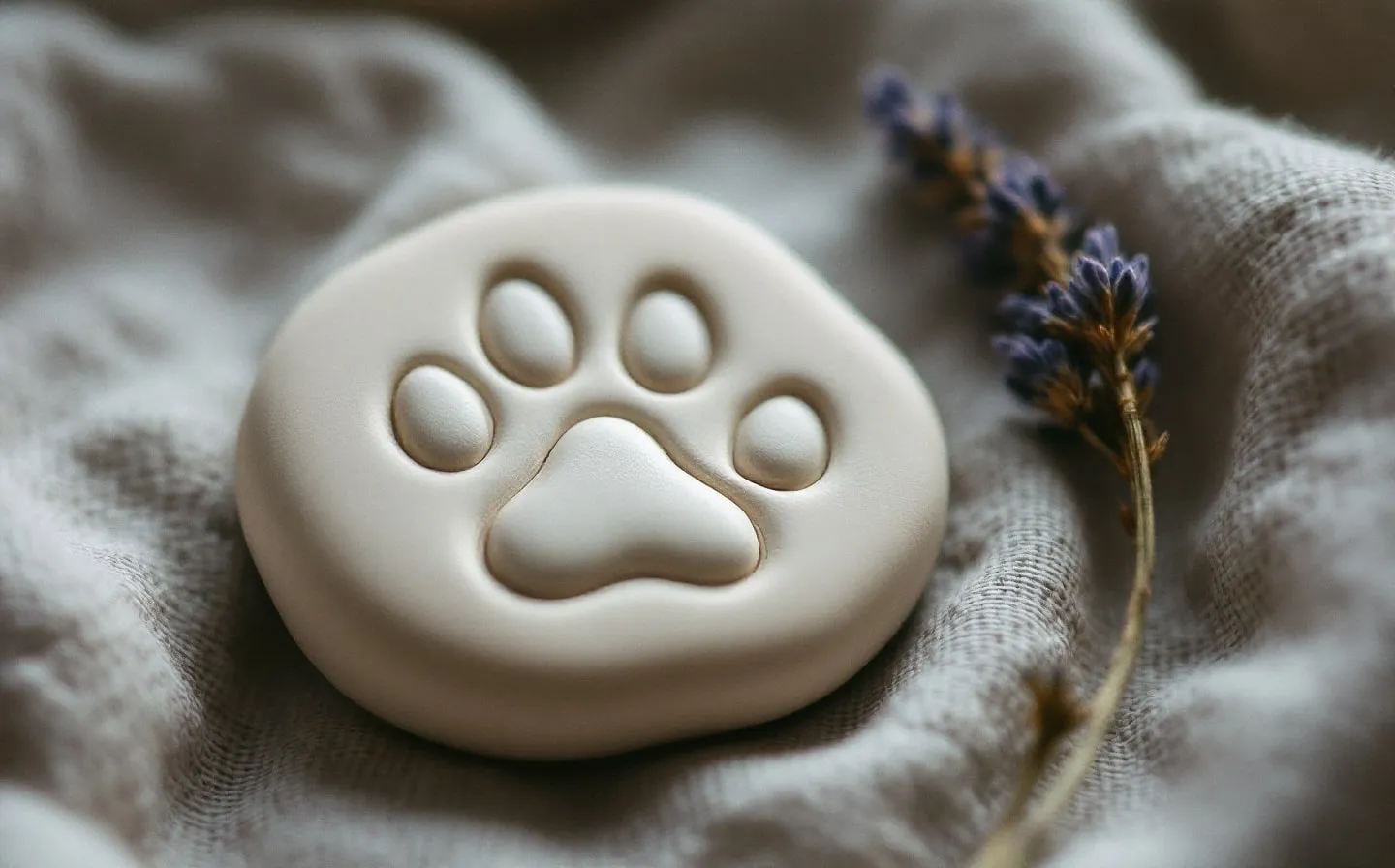
There’s no wrong way to remember a dog — some find comfort in something physical, some in a small ritual:
- A paw print or fur clipping — many vets and cremation providers offer these, and you can make a paw print at home.
- The ashes — kept in an urn, divided among family, scattered somewhere they loved, or buried under a tree you plant for them.
- Something wearable — a collar tag, or jewelry that holds a small amount of ash or fur.
- A marker or photo — a framed picture, a stone in the garden, or a donation to a shelter in their name.
For the full range of options — and what each one actually costs — see pet memorial ideas. If it’s specifically the ashes you’re deciding about, what to do with pet ashes covers keeping, scattering, and burying them, including the legal side.
None of it is required, and there’s no deadline. The point isn’t to do it “right” — it’s to have something that helps, if and when you want it.
When you’re ready to arrange cremation
There’s no rush. But when you are ready, you shouldn’t have to call around comparing crematories just to find one you can trust. That’s the part we handle. Tell us your city and we’ll connect you with the one cremation provider in your area we’d trust with our own pets — no paid listings, no upsells, just a straight answer when you need one. Using Hallowed Paws is free for pet owners, and there’s no obligation: the form simply connects you, and you decide from there.
Find a trusted provider near you →
Hallowed Paws is an independent resource built for pet owners, not the cremation industry — we don’t run a crematory and we take no cut of what you spend.
Connect with the provider we'd trust
Free for pet owners · we sell you nothing · no paid listings, no upsells.