
Pet Cremation: What It Costs and How to Choose Well
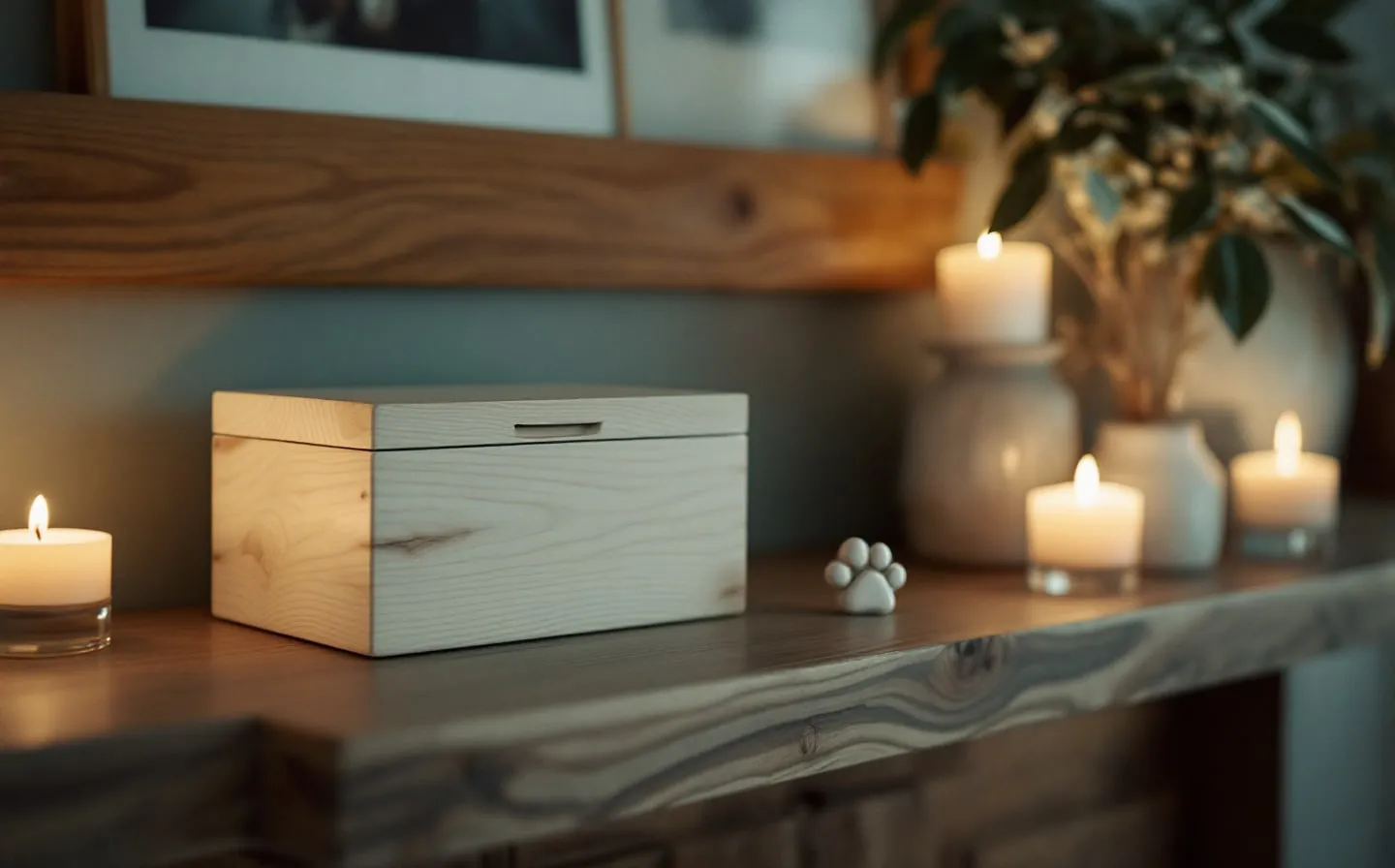
Pet cremation uses heat to reduce a pet’s body to ash. There are three types: private (your pet alone, ashes returned), communal (multiple pets together, no ashes returned), and witnessed (you can attend). In 2026, U.S. prices run roughly $75 to $575, depending on the type, your pet’s weight, and your region.
Below: how each type works, what it costs, what actually happens during the process, and how to choose a provider you can trust — written by an independent resource that works for pet owners, not the cremation industry. For the bigger picture — what the industry rarely volunteers about pricing, your rights, and verifying the ashes — see the truth about pet cremation.
If you already know what you need and simply want it arranged, we will connect you with the provider in your city we would trust with our own pet.
The three types — and the one choice that matters most
Almost every decision in pet cremation comes down to one question: do you want the ashes back? That single choice determines which type you’re choosing.
| Type | What happens | Ashes returned? | Typical price |
|---|---|---|---|
| Private (individual) | Your pet is cremated alone in the chamber | Yes — they’re your pet’s | $150–$475 |
| Communal | Several pets are cremated together | No | $75–$160 |
| Witnessed | Private, and you can be present | Yes | $175–$550 |
Private (individual) cremation is the most common choice when you want to keep or scatter the ashes. Your pet is the only one in the chamber, so what comes back is theirs.
Communal cremation places several pets in the chamber together. The ashes can’t be separated, so none are returned. It’s a respectful, lower-cost option chosen by families who don’t need the remains back — and there’s nothing wrong with choosing it.
Witnessed cremation is a private cremation you’re allowed to attend. Some owners find it matters to see it through; many providers offer it for a small added fee.
The trap to avoid: paying for private and receiving communal. It’s uncommon, but it’s the single biggest worry owners carry afterward — which is exactly why the verification questions further down matter.
For a deeper comparison, see our guide on private vs. communal pet cremation.
What pet cremation costs in 2026
Pricing nationally in 2026 ranges from about $75 for communal cremation of a small pet to $575 for aquamation of a large one. Two things drive most of the variation: the service type, and your pet’s weight.
The industry doesn’t advertise this: in our review of providers, fewer than one in five publish their full pricing online. Most require a phone call for a quote, which means grieving families end up calling around just to compare. That’s not necessarily bad faith — pricing genuinely varies by weight and service — but it puts the burden on you at the worst possible time.
For the full breakdown by weight tier, region, and add-on, see our cost of pet cremation guide.
What actually happens during cremation
The process itself is straightforward:
-
Intake
Your pet is collected from your home or vet, or you bring them in. A reputable provider assigns an ID that stays with your pet from this point on.
-
Cremation
Your pet is placed in the chamber. Flame cremation takes a few hours.
-
Processing
After cooling, the remains are processed into a fine, uniform ash, and any metal — like a surgical pin — is removed.
-
Return
The ashes are placed in the urn or container you chose and returned to you, usually with documentation.
Reputable providers track your pet with a numbered ID — often a metal tag — that stays with the body from intake to return.

The question almost nobody thinks to ask in the moment: how do you know the ashes you get back are your pet’s?
For private cremation, the answer should be a system, not a promise. Ask:
- How is my pet tracked through the process? Good providers use a numbered ID — often a metal tag — that stays with the body from intake to return.
- Can I witness the cremation? Even if you don’t plan to, a provider who offers it is one confident in their process.
- Will I get a certificate? A document naming your pet and the date is standard at reputable providers.
If a provider can’t clearly explain how they keep pets separated and identified, that alone is a reason to choose someone else.
Aquamation: the water-based alternative
Aquamation (technically alkaline hydrolysis, sometimes called water cremation) uses heated water and alkalinity instead of flame to return a pet’s body to its mineral elements. You still receive ashes, just as you do with flame cremation.
It appeals to owners who want a gentler, lower-energy option, and it’s increasingly available in 2026 — most metros now have at least one provider. It typically costs about $30–$80 more than equivalent flame cremation and takes longer, because the process itself is slower — often one to three weeks before the ashes come back. Our full guide to pet aquamation covers the cost, the legality confusion, and how it compares.
What you get back

With private cremation or aquamation, you receive your pet’s ashes — generally about 3–5% of their body weight, returned in a standard urn unless you choose an upgrade. Many providers also offer keepsakes: a clay paw print, a lock of fur, or jewelry that holds a small amount of ash.
Timelines: flame cremation is usually 24–72 hours; aquamation runs one to three weeks. Ask for the expected window up front so you’re not left wondering.
Cremation or burial?
Some families weigh cremation against burial. Both are valid; they solve for different things.
- Cremation is more flexible and usually less expensive. You can keep the ashes, scatter them somewhere meaningful, divide them among family, or bury them later. It doesn’t tie you to one place or to a home you might move away from.
- Home burial feels right to some owners, but it’s illegal in most U.S. cities and restricted by many counties and HOAs — and if you move, you leave your pet behind. Check your local ordinance before assuming it’s an option.
- Pet cemetery burial offers a permanent, dedicated place to visit, but it’s typically the most expensive choice ($300–$1,500+) and adds ongoing plot considerations.
For most families, cremation wins on cost and flexibility — which is why it’s the far more common choice. Burial wins when having a fixed, physical place to return to matters more than anything else.
How to choose a provider you can trust
When a pet dies, most people open a laptop, search “pet cremation near me,” and call whoever appears first. But the top of that page is rarely the best provider — it’s the one that spent the most to be there:
- The first result is often a paid ad.
- The next is frequently a directory that collects a referral fee for handing you off.
- Even a vet’s recommendation can carry a commission, though many are given in good faith.
None of those signals tell you how a provider actually handles pets behind the door you never see. So evaluate the provider, not their ranking. Before you commit, ask:
- What’s the all-in price for my pet, including pickup and a standard urn? A straight answer is a good sign; hedging is not.
- What’s included, and what’s extra? Get urn, paw prints, and documentation quoted up front.
- How do you track and identify my pet through the process?
- How long until I get the ashes back?
- Are you licensed, and can you confirm the cremation type in writing?
Clear, specific answers given without hesitation are what you’re listening for. Pricing and process aren’t supposed to be mysteries.
Your rights as a pet owner
Knowing these turns the decision from something done to you into something you control. For an example of how one state handles licensing and disclosure, see our Arizona pet cremation regulations guide.
What to do first
If you’ve just lost your pet, you have more time than it feels like. Our step-by-step guide on what to do when your dog dies covers the first hours in detail, and the steps apply to any pet.
- At the vet: You can ask about cremation options and take a day to decide. You’re not obligated to use whoever they suggest, and you can ask them to hold your pet briefly while you choose.
- At home: Call a local cremation provider or your vet’s office; either can arrange pickup. If it’s overnight, keeping your pet cool and wrapped is enough until morning.
- On the type: There’s no rush to choose private vs. communal in the first ten minutes. Take the time to ask the questions above.
The goal isn’t to decide fast. It’s to decide once, well, and not spend years wondering whether you got it right.
Finding a provider you can trust
That’s why Hallowed Paws exists. We’re an independent resource — built for the pet owner, not the industry. We vet local cremation providers on how they actually handle pets, partner with one provider per city we’d trust with our own, and take no paid placement. It’s free for pet owners.
When you’re ready, tell us your city and we’ll connect you with the provider in your area we’d choose if it were our pet. You can see how it works, or — if you’re in Arizona — start with Phoenix pet cremation.
The goodbye happens fast. How you do it lasts. The questions above are how you make the call you won’t second-guess.
Connect with the provider we'd trust
Free for pet owners · we sell you nothing · no paid listings, no upsells.